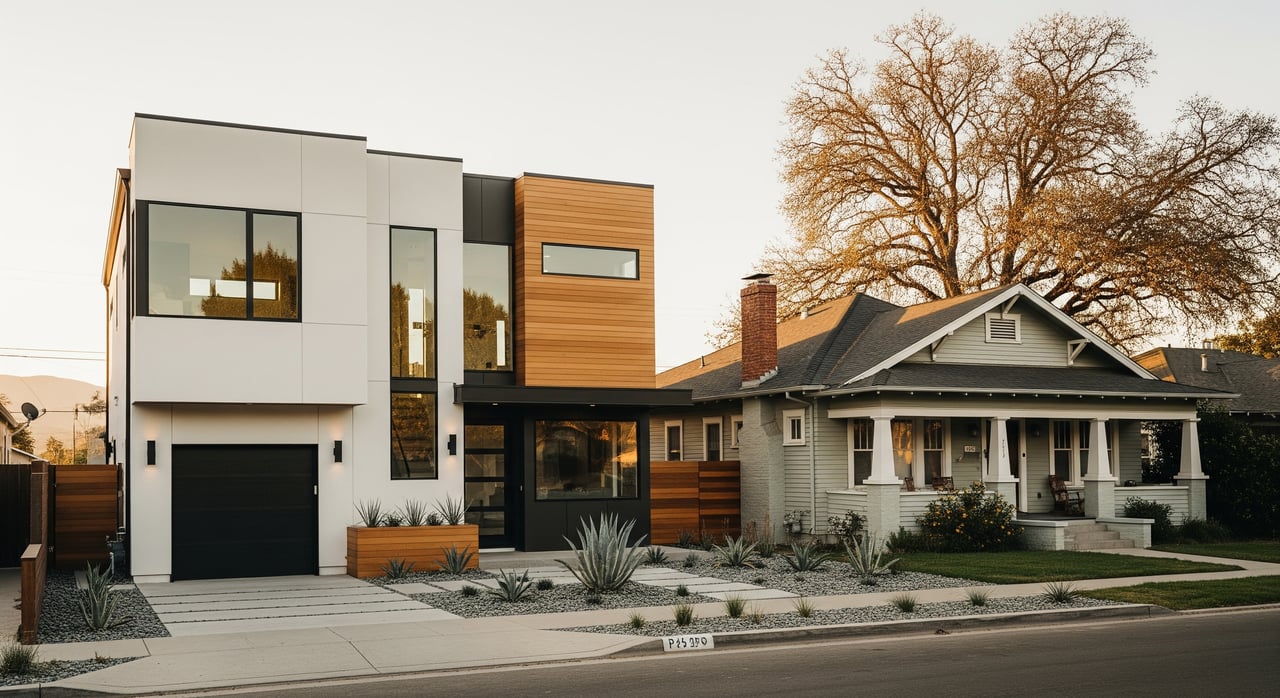
Torn between the shine of a new build and the charm of a 1950s bungalow in Del Rey’s 93616? It is a real choice between lifestyle, operating costs, and how much work you want to take on after closing. You want a home that feels right now and holds value over time. This guide gives you a clear side-by-side framework, realistic budget ranges, and local checklists so you can compare with confidence. Let’s dive in.
Who each option fits
New build fits you if:
- You want move-in ready, low-maintenance living.
- Energy efficiency, modern layout, and storage matter most.
- You prefer to spend more upfront and less on near-term repairs.
1950s bungalow fits you if:
- You value original character and established yards.
- You are open to updates and customization over time.
- You want a potentially lower entry price with room to add value.
Price and PPSF in 93616
Pricing often comes down to price per square foot, but not all square feet are equal. New construction commonly carries a PPSF premium due to modern layouts, finishes, and lower immediate maintenance needs. You will get the best read by comparing closed sales in the last 6 to 12 months and adjusting for features that change value.
How to compare apples to apples
- Use recent closed comps in 93616 for both property types.
- Adjust for living area only. Separate out garages, unfinished spaces, and ADUs.
- Account for lot size and usable yard, parking, and level of finish.
- Verify that additions are permitted and included in recorded square footage.
What drives premiums
- New builds: modern floorplans, high ceilings, efficient systems, and warranties.
- Bungalows: remodeled kitchens and baths, permitted additions, and larger lots can narrow the price gap.
- Lot and block: orientation, curb appeal, and outdoor space can meaningfully shift value.
Incentives and credits at the table
- New builds sometimes offer upgrades or closing cost incentives through the builder. Get all promises in writing.
- For bungalows, use inspection findings and contractor quotes to negotiate credits for repairs and safety updates.
Energy and utility costs
Energy performance is a major long-term cost driver in Fresno’s climate. New homes are built to current California Building Energy Efficiency Standards, often called Title 24. That typically means better insulation, tighter air sealing, high-efficiency HVAC, LED lighting, and electric-ready features like EV charging.
New build expectations
- Lower near-term utility costs due to efficient envelopes and systems.
- Many plans are designed around heat pumps and electrification.
- Potential eligibility for new-build or electrification incentives, where available.
1950s bungalow realities
- Original windows, limited insulation, and older HVAC are common unless already upgraded.
- Strategic retrofits can cut bills: attic insulation, air sealing, double-pane windows, and high-efficiency HVAC or heat pumps.
- Incentives and credits to check: utility rebates for efficiency or electrification and the federal Residential Clean Energy Credit for qualifying solar and some battery installations. Always confirm current program details and eligibility with the utility and IRS guidance.
Payback perspective
- Many energy retrofits pay back over several years. Solar economics depend on system size, orientation, and current policies. Consider total cost of ownership over a 5 to 10 year horizon.
Layout, character, and lifestyle
1950s bungalow traits
- Smaller rooms and lower ceilings, often around 8 feet.
- Original millwork, plaster walls, hardwood floors, and front porches.
- Mature landscaping and established yards are common.
New construction traits
- Open floorplans with larger kitchens and primary suites.
- Taller ceilings and integrated storage throughout.
- Lower-maintenance landscaping at move-in.
Walkability and daily flow
- Walkability varies block by block in Del Rey. Map your daily needs and test the drive and walk during commute times.
- If you work from home, check for dedicated workspace, natural light, and storage. New builds often plan for this, while bungalows may need creative space planning.
Maintenance and risk profile
New builds usually bring fewer near-term capital expenses, plus a builder warranty. You still want to verify permits, grading and drainage, and the quality of finish work.
1950s bungalows often require higher annual reserves and targeted updates. Focus inspections on systems and safety so you can plan your first year budget.
Inspection priorities: bungalows
- Roof age and condition.
- Electrical system and panel capacity; confirm wiring type.
- Plumbing material, sewer lateral condition, and water heater age.
- Foundation or settling, drainage, and any termite or pest activity.
- Potential presence of lead-based paint or asbestos if you plan to renovate.
Inspection priorities: new builds
- Confirm final inspection sign-offs and permit completion.
- Verify energy testing results if provided.
- Check grading, drainage, and scope of work aligns with your contract.
- Document all punchlist items before closing and understand warranty terms.
What to budget for maintenance
- Older homes often require a higher annual reserve. A common rule of thumb is 1 to 3 percent of the home’s value per year, with older properties trending higher.
Renovation scope and costs
If you lean bungalow, build a plan that fits your timeline and cash flow. Many buyers phase projects over the first 12 to 24 months.
Typical 1950s bungalow upgrades
- Kitchen: minor refresh $10,000 to $30,000; mid-range full remodel $40,000 to $90,000; high-end gut $90,000 to $150,000+.
- Bathroom: cosmetic $5,000 to $12,000; mid-range $12,000 to $30,000; luxury $30,000 to $60,000+.
- Windows: replace 8 to 12 openings with double-pane units $8,000 to $25,000.
- HVAC: high-efficiency split or heat pump $5,000 to $15,000.
- Roof: asphalt shingle replacement $5,000 to $12,000+ depending on materials.
- Electrical: panel upgrade or rewire $3,000 to $15,000.
- Foundation or structural: minor $5,000 to $20,000; larger projects $20,000 to $100,000+.
- Sewer lateral: $5,000 to $20,000.
- Lead or asbestos remediation: small-scale $1,000 to $5,000, higher for extensive work.
These ranges are planning estimates. Always collect local contractor bids for accuracy.
Typical new build personalization
- Landscaping and hardscape: $5,000 to $50,000.
- Window coverings, closets, built-ins: $2,000 to $15,000.
- Appliance or smart-home packages: $3,000 to $25,000.
- Solar and battery: $15,000 to $40,000 before incentives, depending on size and equipment.
Permits and rules
- Bungalows: structural changes and additions require permits. Unpermitted work affects value and financing, so verify history with local records.
- New builds: major changes right after completion may be limited by subdivision or builder rules. Confirm any HOA guidelines and warranty impacts before starting work.
Resale and long-term value
Long-term value in 93616 hinges on more than finishes. Durable systems, adaptable floorplans, and lot quality matter. Permitted improvements, including sensible kitchen and bath updates or a well-executed addition, can support value. Compare against closed comps on your exact block and adjust for lot size, garage and parking, and permitted living area.
- New builds often appreciate in line with the neighborhood, especially when layouts and finishes remain current.
- Updated bungalows can hold value through character and thoughtful upgrades if systems are modernized and work is permitted.
A simple decision framework
Use this quick path to clarity before you write an offer.
- Clarify lifestyle must-haves
- List non-negotiables: bedroom count, home office, storage, yard, parking, and walkability needs.
- Compare PPSF the right way
- Gather 6 to 12 recent closings in 93616 for both options. Adjust for permitted living area, lot usability, garage, and major upgrades. Focus on the median for each type.
- Model a 5-year total cost of ownership
- Purchase price plus immediate repairs, projected annual maintenance, and a rough utility estimate based on energy profile. Include any planned remodels and likely incentives to offset costs.
- Inspect before you fall in love
- Bungalows: add sewer scope, termite, electrical, plumbing, and foundation checks. Test for lead and asbestos if you will renovate.
- New builds: verify permit sign-offs, energy testing, and warranty coverage. Walk the lot after rain to observe drainage.
- Negotiate with numbers
- For bungalows, use firm contractor quotes for credits. For new builds, ask for upgrades, rate buydowns, or closing cost incentives and document them in the contract.
The bottom line
If you want turnkey comfort, low maintenance, and lower near-term utility costs, a new build in Del Rey likely fits best. If you love character, mature outdoor space, and the chance to tailor your home over time, a 1950s bungalow can be a smart buy with a clear plan and the right inspections. Either path can deliver long-term value when you compare apples to apples and budget with eyes open.
If you want design-forward guidance on how to maximize comfort and resale, reach out to Joanna Steinberg for a personalized plan and vetted vendor introductions.
FAQs
What is the best way to compare PPSF in Del Rey 93616?
- Use closed sales from the last 6 to 12 months, adjust for permitted living area only, lot and yard usability, garage and parking, and level of finish. Focus on the median after adjustments.
How do energy costs differ between new builds and 1950s homes?
- New builds typically meet current Title 24 standards, which reduces heating and cooling loads. Older homes often need insulation, window, and HVAC upgrades to narrow the gap.
What inspections are most important for a 1950s bungalow?
- Prioritize roof, electrical, plumbing and sewer lateral, foundation and drainage, termite and pest, and testing for lead or asbestos if you plan to renovate.
What should I verify before closing on a new build in 93616?
- Confirm final permits and sign-offs, understand warranty coverage and length, verify energy testing if provided, and complete a thorough punchlist that includes grading and drainage.
How much should I budget for bungalow upgrades in year one?
- Create a phased plan. Many buyers set aside funds for the biggest comfort wins first, such as HVAC $5,000 to $15,000, insulation and windows $8,000 to $25,000, and a bathroom or kitchen refresh if needed.
Can incentives help with energy upgrades or solar in Fresno?
- Yes, utility rebates for efficiency or electrification may be available, and the federal Residential Clean Energy Credit can apply to qualifying solar and some battery systems. Always confirm current program terms and eligibility.