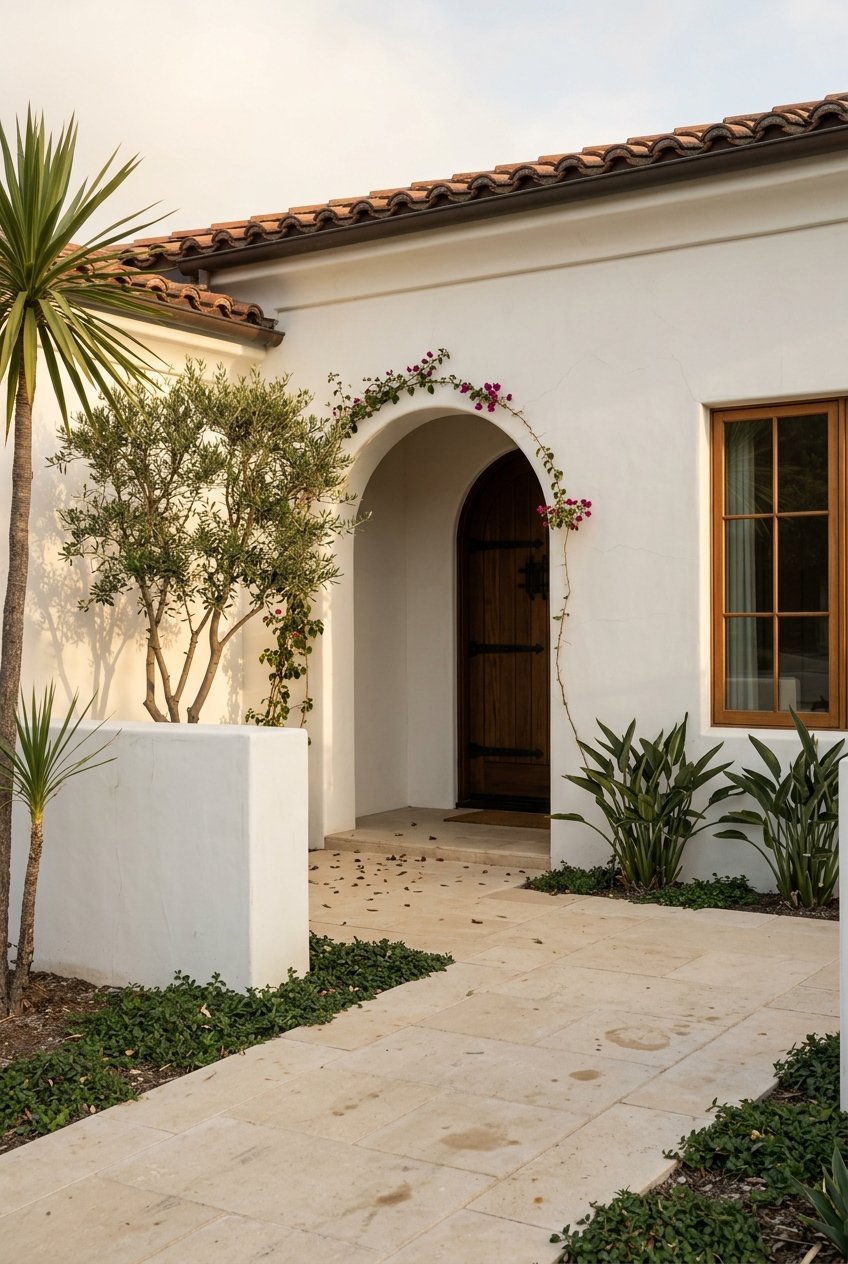
Are you buying a house, or are you buying a point of view? In Hancock Park, that question matters because the neighborhood’s appeal is not only square footage or address. It is the feeling of arriving at a home with a deep lawn, a formal setback, and architecture that was meant to be experienced from the street to the front door. If you are a design-minded buyer, understanding that framework can help you choose a house you will love living in and updating. Let’s dive in.
Why Hancock Park Feels So Distinct
Hancock Park is a 1920s residential subdivision in the eastern portion of the original Rancho La Brea. The City of Los Angeles describes it as a district of substantial two-story single-family homes built in Period Revival styles, including Tudor Revival, English Revival, Spanish Colonial Revival, Mediterranean Revival, Monterey Revival, and American Colonial Revival.
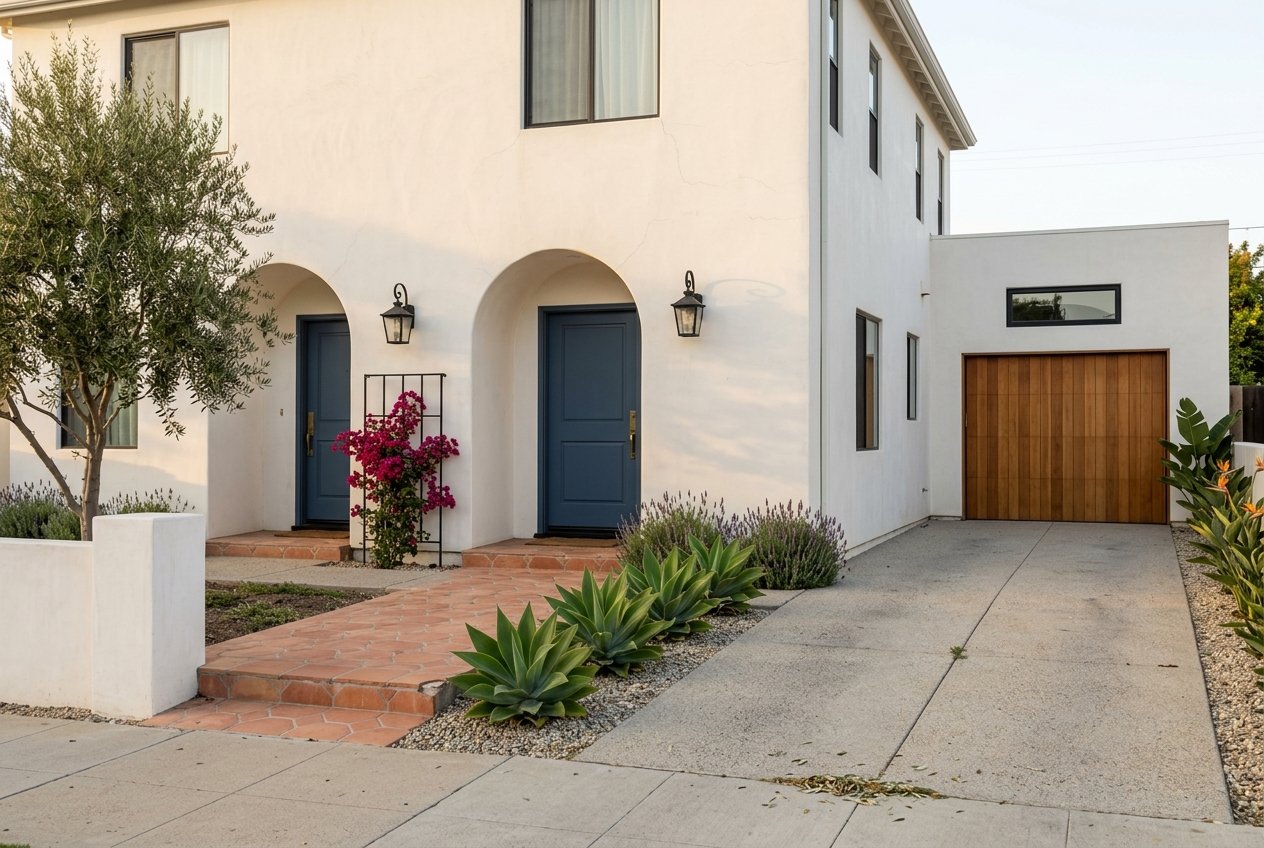
That matters because the architecture here extends beyond the walls of the house. The city notes that many homes are set back about 50 feet from the street, with side driveways that often pass through a porte cochere to a rear garage. For you as a buyer, the front lawn, the approach, and the placement on the lot are part of the design story.
What Design-Minded Buyers Should Notice
If you are comparing Hancock Park to newer parts of Los Angeles, the biggest difference is often composition. These homes were designed as complete visual statements, with massing, rooflines, windows, and landscape working together.
That means you are not simply evaluating finishes. You are also looking at proportions, symmetry or asymmetry, how the home meets the street, and whether later updates support the original character or compete with it.
Tudor and English Revival Living
What defines the style
The Hancock Park preservation plan describes Tudor-style homes as typically two or three stories with steeply pitched hipped roofs and side gables, stucco or brick and stone exteriors, half-timbering, tall narrow diamond-paned windows, and large chimneys. English Cottage versions tend to be smaller and often use more brick with less half-timbering.
How the style tends to feel
For everyday living, these details usually create a more vertical and enclosed feel than a modern open-plan house. Smaller window openings and dramatic roof forms can give rooms a sense of intimacy and definition.
If you love houses with mood, texture, and a clear sense of rooms having distinct purposes, this style may speak to you. If your priority is an airy, wide-open layout, you may want to look carefully at how the home has been updated on the inside.
Spanish Colonial Revival Living
What defines the style
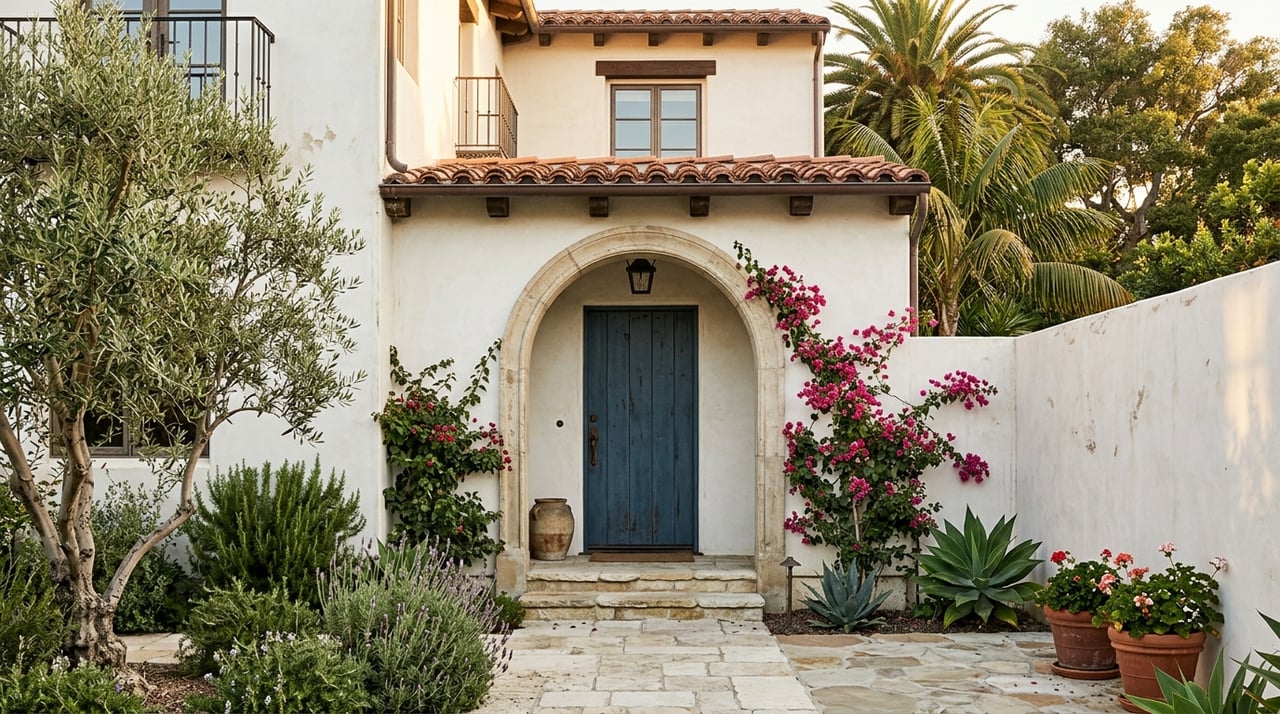
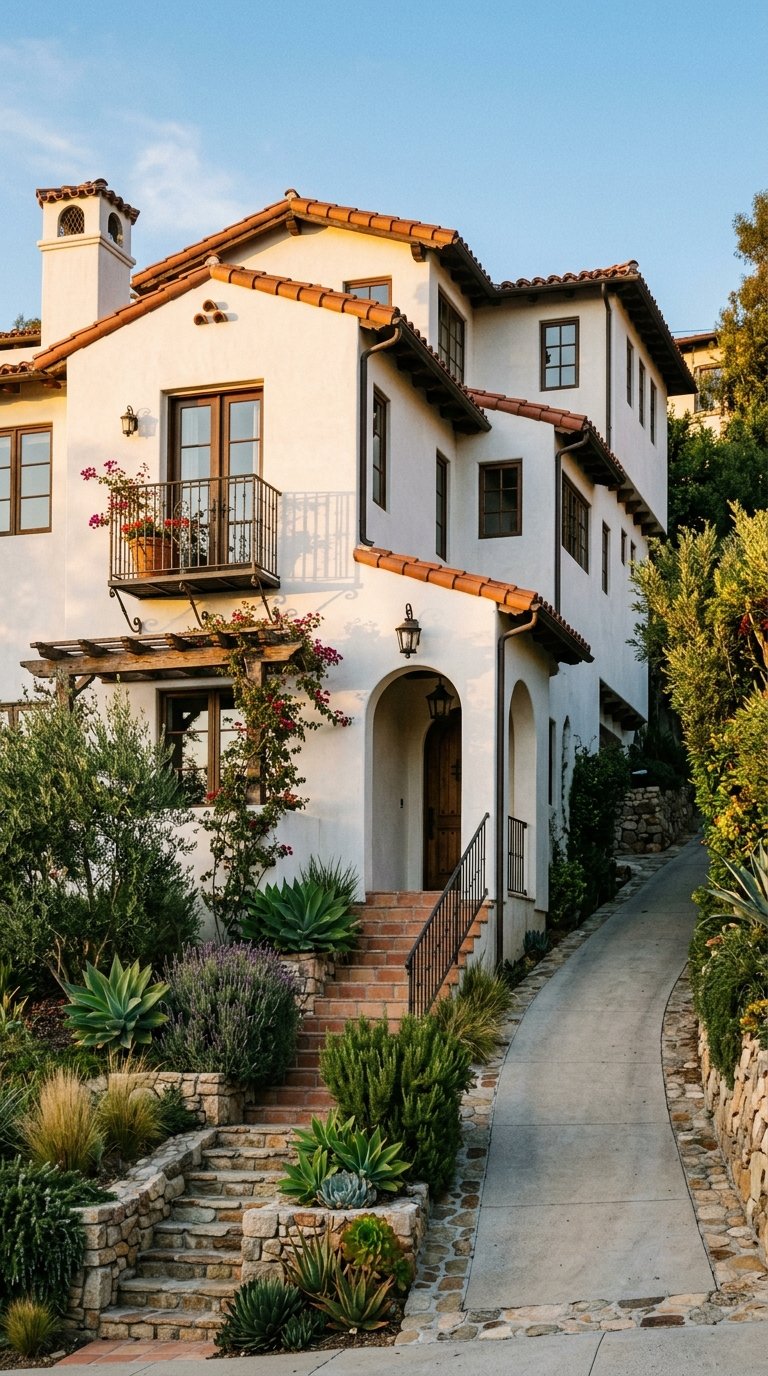
The preservation plan describes Spanish Colonial Revival homes as generally one or two stories with rectangular floor plans, low-pitched tiled roofs, recessed openings, decorative ironwork, and gardens. Windows are often rectangular casements or fixed panes, sometimes with arched or rectangular tops, and may include stained or leaded glass.
How the style tends to feel
In practice, this style often reads as more horizontal and garden-oriented. Compared with Tudor homes, Spanish Colonial Revival houses can feel more connected to patios, courtyards, and outdoor rooms.
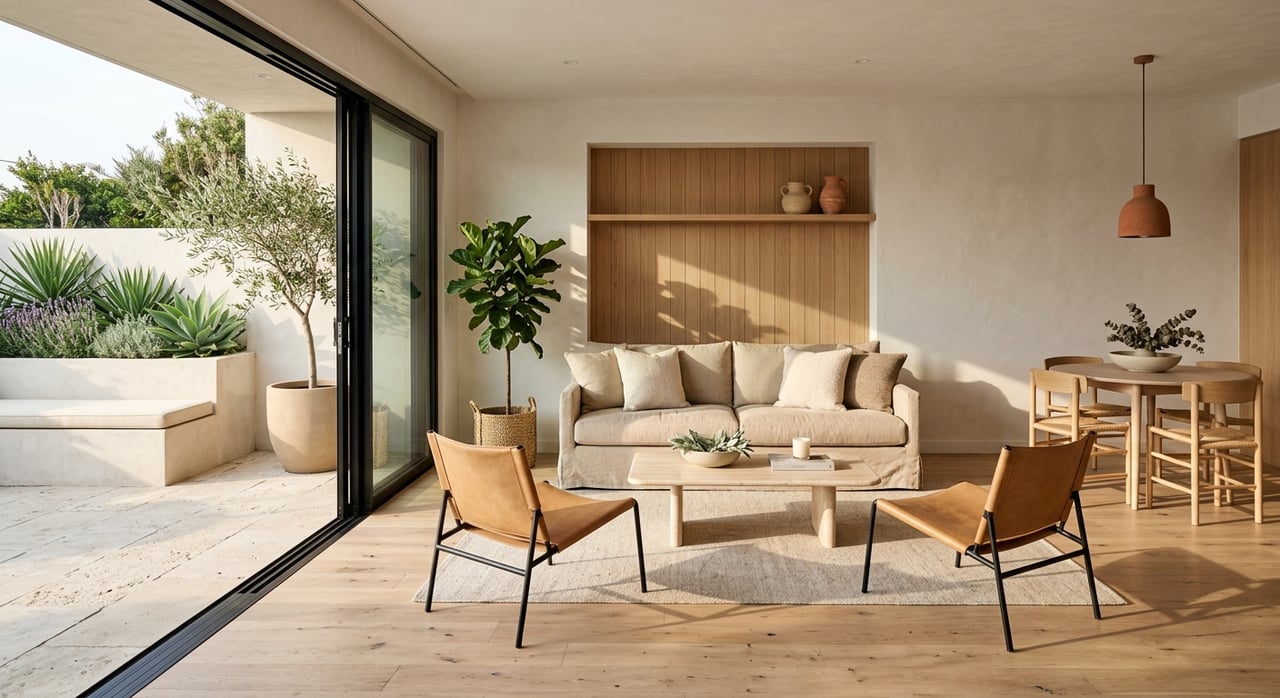
For a design-minded buyer, that can mean strong potential for indoor-outdoor living while still preserving a sense of period character. Materials also tend to do a lot of visual work here, especially stucco, tile, iron, and wood details.
Mixed Styles Are Part of the Charm
One of the most interesting things about Hancock Park is that many homes are not pure textbook examples of a single style. The preservation plan emphasizes that houses are often stylistically mixed, and that these mixed-style homes are still historically significant.
That is a useful lens when you are touring properties. Rather than asking whether a home is a perfect Tudor or a perfect Mediterranean, it can be smarter to ask whether the elements feel coherent, layered, and true to the house’s era.
How to Read a Home Beyond the Listing Photos
Design-minded buyers often notice details other buyers miss. In Hancock Park, that can be a major advantage because the value of a home is often tied to the quality of its architectural composition.
As you walk a property, look for:
- The relationship between the house and the lot
- The depth and formality of the front setback
- Original window patterns and openings
- Roofline shape and visual balance
- Whether additions feel integrated or obvious
- How hardscape, landscaping, and entry sequence support the architecture
A beautifully styled interior can be changed. The core architectural moves are harder to replicate, so they deserve your attention first.
What Can Be Updated More Easily
For many buyers, the big question is how to modernize a period home without losing what makes it special. In Hancock Park, the preservation review process is generally aimed at street-visible facades, large additions, and infill development, rather than every change you might make.
The preservation plan explicitly exempts interior remodels and paint color. It also exempts many rear-yard and non-visible items. In practical terms, that usually means kitchens, baths, systems, and other interior reconfigurations offer more flexibility than front-facing exterior changes.
Where You Should Be More Careful
If you are considering facade changes, roofline alterations, or a larger addition, you should approach the property with more care. Those types of updates may receive greater scrutiny under the local preservation framework.
The city’s preservation plan also makes an important point: the goal is to preserve Hancock Park as a collection of Period Revival residences, not to treat each house as an isolated monument. For buyers, that is encouraging. It suggests there is room to improve livability, as long as the work respects the broader architectural context.
Balancing Modern Living With Original Character
The best Hancock Park updates usually do not fight the house. They work with its proportions, materials, and rhythm.
That might mean preserving the feel of a formal entry while making the kitchen function better. It might mean refining circulation, updating systems, or rethinking finishes in a way that feels quieter and more intentional. In a neighborhood like this, restraint often reads as sophistication.
Daily Life Around Hancock Park
Architecture is only part of what draws buyers here. Daily life is also shaped by the neighborhood’s central Los Angeles location and its connection to nearby Larchmont Village.
Larchmont Village is the nearby commercial core that often factors into day-to-day living for Hancock Park residents. Local sources describe it as a compact boutique-and-cafe district with roots in early 1920s development and pedestrian-oriented planning. That gives you a historic residential setting paired with a smaller-scale retail node, rather than a suburban-style shopping center.
The broader location also adds to the appeal. Hancock Park sits near areas including Hollywood, La Brea, Melrose, Fairfax, and the Miracle Mile, which helps explain why buyers are drawn to its old-house character and central-LA access.
Is Hancock Park Right for Your Design Priorities?
Hancock Park can be an excellent fit if you value architecture as part of daily life, not just visual decoration. The neighborhood rewards buyers who appreciate lot placement, original style language, and the subtle differences between homes that may look similar at first glance.
It may be especially compelling if you want a residence with established character and the chance to personalize interiors over time. If your ideal home combines architectural substance, a strong sense of place, and access to central Los Angeles, Hancock Park offers a rare mix.
Buying With a Curated Eye
In a neighborhood like Hancock Park, good buying decisions come from looking past surface updates and understanding the bones of a house. The right home is often the one where architecture, livability, and future improvements can work together.
That is where a design-aware approach can make a real difference. If you want help evaluating Hancock Park homes through both a real estate and interiors lens, connect with Joanna Steinberg for a tailored, high-touch buying experience.
FAQs
What architectural styles are common in Hancock Park homes?
- Hancock Park is known for Period Revival architecture, including Tudor Revival, English Revival, Spanish Colonial Revival, Mediterranean Revival, Monterey Revival, and American Colonial Revival.
What makes Hancock Park architecture different from newer Los Angeles homes?
- Many Hancock Park homes were designed as complete compositions, with deep front setbacks, formal approaches, side driveways, and architecture that works together with the lot and landscaping.
What do Tudor Revival homes in Hancock Park usually feel like inside?
- Based on their steep roofs, narrower windows, and more vertical forms, Tudor and English Revival homes often feel more enclosed and room-based than newer open-plan houses.
What do Spanish Colonial Revival homes in Hancock Park usually feel like?
- Their lower rooflines, rectangular plans, recessed openings, and garden orientation often create a more horizontal feel with strong indoor-outdoor potential.
Can you remodel the inside of a Hancock Park home?
- Yes. The Hancock Park preservation plan explicitly exempts interior remodels, which generally gives buyers more flexibility for kitchens, baths, systems, and interior reconfiguration.
What types of changes to a Hancock Park home need more caution?
- Street-visible facade work, roofline changes, large additions, and infill-related exterior changes usually deserve more careful review because they are more likely to fall within the local preservation process.
Why do design-minded buyers like Hancock Park in Los Angeles?
- Many buyers are drawn to Hancock Park for its layered Period Revival architecture, formal lot placement, historic setting, and access to nearby Larchmont Village and other central Los Angeles destinations.