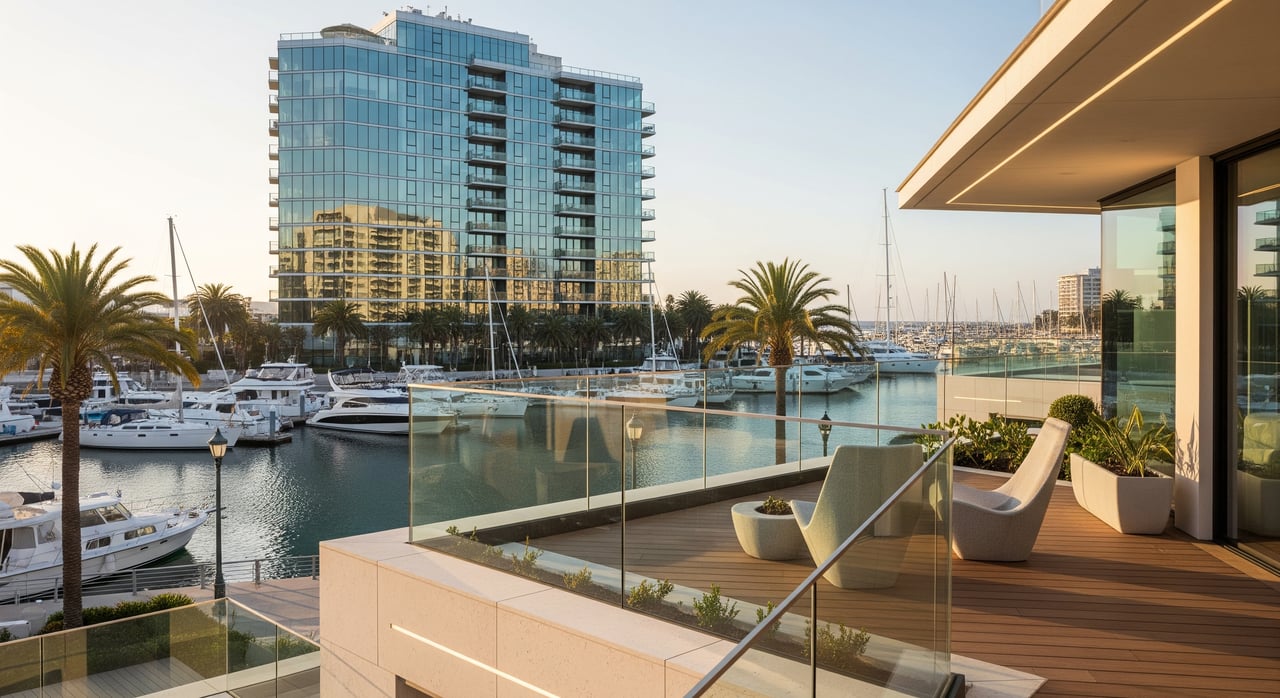
Shopping for a Marina del Rey home and torn between a condo and a townhome? You are not alone. The coastal lifestyle, county-managed harbor, and mix of buildings here make the decision feel more complex than in other Los Angeles neighborhoods. In this guide, you will learn the key differences in ownership, lifestyle, HOA fees, parking, amenities, boating, and due diligence so you can choose with confidence. Let’s dive in.
Quick take: Condo vs townhome
If you want resort-style amenities, minimal maintenance, and potential marina or water views, a condo may fit best. Many buildings along Admiralty Way, Via Marina, and the waterfront offer a lock-and-leave lifestyle.
If you prefer a private entry, multi-level living, and a dedicated garage with extra storage, a townhome often feels more like a house. In Marina del Rey, townhomes are more common on interior blocks than on the immediate waterfront.
Use the sections below to match your daily rhythm, budget, and long-term goals.
Ownership and HOA structures
Condo ownership typically gives you the interior of your unit plus an undivided interest in shared elements. In marina high-rises, the HOA usually maintains the exterior, roof, building systems, and common areas like elevators, pools, and gyms. Governance follows California’s Davis‑Stirling Common Interest Development Act and each building’s CC&Rs.
Townhomes can be structured as condominiums or as fee-simple lots with an HOA. In California, many townhomes are legally condos even if they look like attached houses. HOA responsibilities vary a lot by community, from limited common-area coverage to more comprehensive exterior maintenance.
What this means for you: review the CC&Rs to see exactly what the HOA maintains and what falls to you. In larger waterfront buildings, expect more complex reserve planning for items like elevators, façades, and balconies.
Space, privacy, and outdoor living
Condos often offer single-level living in mid or high-rises, with shared corridors and elevators. Balconies and terraces provide outdoor space, and view orientation can be a major value driver.
Townhomes usually deliver multi-level floor plans, private front doors, and direct garage access. You may also find small patios, roof decks, or limited yard areas. If you like the feel of a house and want more storage, a townhome can be a strong match.
Parking, storage, and boating
In condo buildings, you will typically get assigned spaces in a shared garage. Guest parking can be limited, and storage cages may be assigned or available for a fee. This setup is convenient if you do not need a lot of gear storage.
Townhomes are more likely to provide private attached garages for one or two cars. This can make loading, unloading, and storing bikes or boards simpler. It is a practical advantage for active lifestyles.
For boaters, Marina del Rey’s slips are administered by Los Angeles County’s Department of Beaches and Harbors. Some buildings have separate arrangements or leased slips, but deeded, transferable slips are comparatively rare. Always confirm whether a unit includes a slip, a lease, or priority access, and whether any slip is transferable on sale.
Amenities and on-site services
Many waterfront condo buildings offer amenities like front-desk security, fitness centers, pools, spas, and landscaped common areas. This creates a resort-style experience that appeals if you want convenience and social spaces close to home.
Townhome communities often keep amenities simple. Some may have a small pool or courtyard, but you are typically trading extensive on-site services for more private space and often lower HOA fees.
Fees, reserves, and assessments
Condo HOAs in high-amenity buildings often carry higher monthly fees. Those budgets fund building systems, insurance for common elements, security, amenities, and ongoing exterior maintenance. Older waterfront buildings may need significant capital projects, so it is important to review reserve studies and recent special assessments.
Townhome HOA dues can range from low to moderate, depending on what is covered. Smaller associations can keep costs down, but they may also be more exposed to special assessments if reserves are light.
To compare options confidently, look at the fee amount, what the fee covers, the building’s age, and the health of reserves.
Maintenance and lifestyle
If you want less hands-on maintenance, condos make life simpler. The HOA and building staff handle most exterior and common-area upkeep. This is ideal if you travel often or want a truly lock-and-leave setup.
Townhomes strike a middle ground. You may be responsible for private patios, roofs, or driveways depending on the CC&Rs, but you will likely have less to maintain than with a detached single-family home.
Financing and resale
Condo financing can involve more lender scrutiny. Underwriters review HOA budgets, reserves, litigation, owner-occupancy levels, and rental caps. FHA or VA loans may require project approval.
Townhomes that are fee-simple can be easier to finance. If a townhome is structured as a condominium, expect similar project-level underwriting to a condo.
On resale, condos near the water can command premiums for views and proximity to the marina. Townhomes often appeal to buyers who want a house-like feel with private garages and multi-level space. Your exit strategy should align with your target buyer pool, HOA rules, and the property’s maintenance profile.
Coastal and insurance factors
Marina del Rey’s waterfront setting brings a few unique considerations. Salt air can accelerate wear on exterior metals and finishes. Coastal winds and proximity to the water can affect maintenance schedules. Some properties may be in or near FEMA-designated flood zones, which can influence insurance needs and lender requirements.
If you plan renovations, know that coastal and county permitting can apply. It is smart to confirm local requirements with Los Angeles County departments before you plan major changes.
Due diligence checklist for buyers
Request these items early in your process and review them carefully. They will help you compare buildings, avoid surprises, and negotiate from a position of strength.
HOA and governance documents
- CC&Rs, Bylaws, and Rules and Regulations
- Current HOA budget and most recent reserve study
- HOA meeting minutes for the last 12 to 36 months
- HOA insurance declarations and summary of what is covered
- List of recent and pending special assessments
- Any litigation involving the HOA
- Owner-occupancy ratio and rental cap information
- Management contract or financials if self-managed
Unit-specific items
- Seller disclosures
- Any county notices related to seawalls, harbor, or coastal issues
- Parking assignments, guest parking rules, and storage allocations
- If a boat slip is included or available, documentation that shows ownership or lease, transferability, fees, and any waiting list
- Utility responsibility matrix showing what HOA dues include
Physical condition and risk
- General home inspection and, for condos, attention to moisture, roof, balconies, plumbing, and shared systems
- Balcony and façade inspection reports if applicable
- Seismic retrofit records for older buildings
- Pest and termite reports
- FEMA flood map status and insurance quotes if needed
- Coastal permitting history for material alterations
Financing and legal
- Condo project approval status for FHA or VA loans if relevant
- Property tax bill with any special taxes or assessments
- HOA resale certificate and any transfer or membership fees
- Attorney review if complex HOA or coastal issues arise
Local authorities and resources
- Los Angeles County Department of Beaches and Harbors for slip availability and rules n- Los Angeles County Department of Regional Planning for coastal and unincorporated area permits
- FEMA for flood-zone status
Critical reminders:
- Request the HOA reserve study and recent minutes.
- Verify any boat-slip arrangements directly with LA County, and do not assume transferability.
- Confirm what HOA insurance covers versus owner responsibility, including balconies, interiors, and flood.
Decision guide: Match product to lifestyle
Use these quick questions to clarify your fit.
- Do you want low-maintenance, lock-and-leave living? Choose a condo.
- Do you prefer a private entry, multi-level layout, and a small patio or deck? Choose a townhome.
- Are high-floor views a priority? Condos often deliver the best sightlines.
- Do you need a private two-car garage and gear storage? Townhomes are often better.
- Do you want a pool, gym, concierge, or on-site security? Condos are more likely to offer these.
- Is boating central to your lifestyle? Research slips carefully. Neither condo nor townhome guarantees a deeded, transferable slip.
- Are you concerned about stricter condo underwriting? A fee-simple townhome may simplify financing.
How Joanna Steinberg can help
Choosing between a condo and a townhome in Marina del Rey is about more than square footage. It is about daily flow, HOA strength, long-term costs, and how you want to live by the water. You deserve guidance that connects aesthetics with smart due diligence.
With a design-forward approach and high-touch service, Joanna helps you compare buildings, review HOA documents, and align your choice with lifestyle and resale goals. Her boutique practice also supports staging, interior curation, and turnkey activation if you plan to optimize a home for short-term rental or move-in merchandising. You get clarity on the details that matter and a sharper, more confident decision.
Ready to focus your search and find the right fit in Marina del Rey? Connect with Joanna Steinberg to get started.
FAQs
Are water views standard with Marina del Rey condos?
- No. Many waterfront condos offer marina or water views, but views vary by building and floor. Check orientation and stack-specific outlooks when touring.
Are HOA fees higher for waterfront condos in Marina del Rey?
- Often yes. High-amenity and high-rise buildings carry larger budgets for shared systems, security, and facilities. Review what the fee covers and the latest reserve study.
Which is better for boat owners: condo or townhome?
- Neither type guarantees a slip. Slips are administered by Los Angeles County. Confirm availability, lease terms, and transferability before you buy.
How likely are special assessments in marina buildings?
- It depends on reserves, building age, and planned projects. Older waterfront buildings may face larger capital needs, so review the reserve study and recent minutes.
Can I install an EV charger in a condo garage?
- Possibly. Many installations require HOA approval and electrical capacity review. Ask about existing policies and procedures before making plans.
Do HOAs in Marina del Rey restrict rentals?
- Many HOAs have rental rules. Some cap rental percentages or restrict short-term stays. Read the CC&Rs so you understand any limits before you purchase.
Do I need flood insurance near the marina?
- Some properties may be in or near FEMA-designated flood zones. Verify the map status for the address and obtain quotes if your lender requires coverage.